


People often believe intelligence is something you are simply born with and cannot change. Yet studies from Stanford University have found that those who adopt a growth mindset can actually achieve much higher levels of success and resilience. The real surprise is that these gains are not limited to school or work. They show up in relationships, mental health, and even physical wellness. This means changing your mindset could open doors in every part of your life. Read this growth mindset guide to learn more about how it works.
Table of Contents
- Defining Growth Mindset: What It Is
- The Importance of a Growth Mindset: Why It Matters
- Mechanics of a Growth Mindset: How It Works
- Key Concepts of Growth Mindset: Understanding Core Principles
- Real-World Applications: Applying Growth Mindset in Life
Quick Summary
| Takeaway | Explanation |
|---|---|
| Embrace challenges as learning opportunities | View difficulties as chances to grow, enhancing your skills and resilience. |
| Value effort and persistence in skill development | Understand that consistent practice and dedication lead to mastery over time. |
| Seek feedback for improvement | Use constructive criticism as a tool to refine your abilities and grow personally. |
| Adopt a proactive approach to personal growth | Engage in continuous learning and seek opportunities to expand your skills professionally and personally. |
| Recognize failures as temporary setbacks | Shift your mindset to see failures as part of the learning process rather than insurmountable obstacles. |
Defining Growth Mindset: What It Is
A growth mindset represents a powerful psychological approach to learning, personal development, and overcoming challenges. Unlike traditional perspectives that view intelligence and abilities as fixed traits, this concept suggests that our fundamental qualities can be cultivated through dedicated effort, strategic learning, and persistent practice.
The Core Philosophy Behind Growth Mindset
At its foundation, a growth mindset is about understanding that intelligence and talents are not static. Stanford University research reveals that individuals who believe their abilities can be developed tend to achieve more and demonstrate greater resilience compared to those with a fixed mindset.
The key characteristics of a growth mindset include:
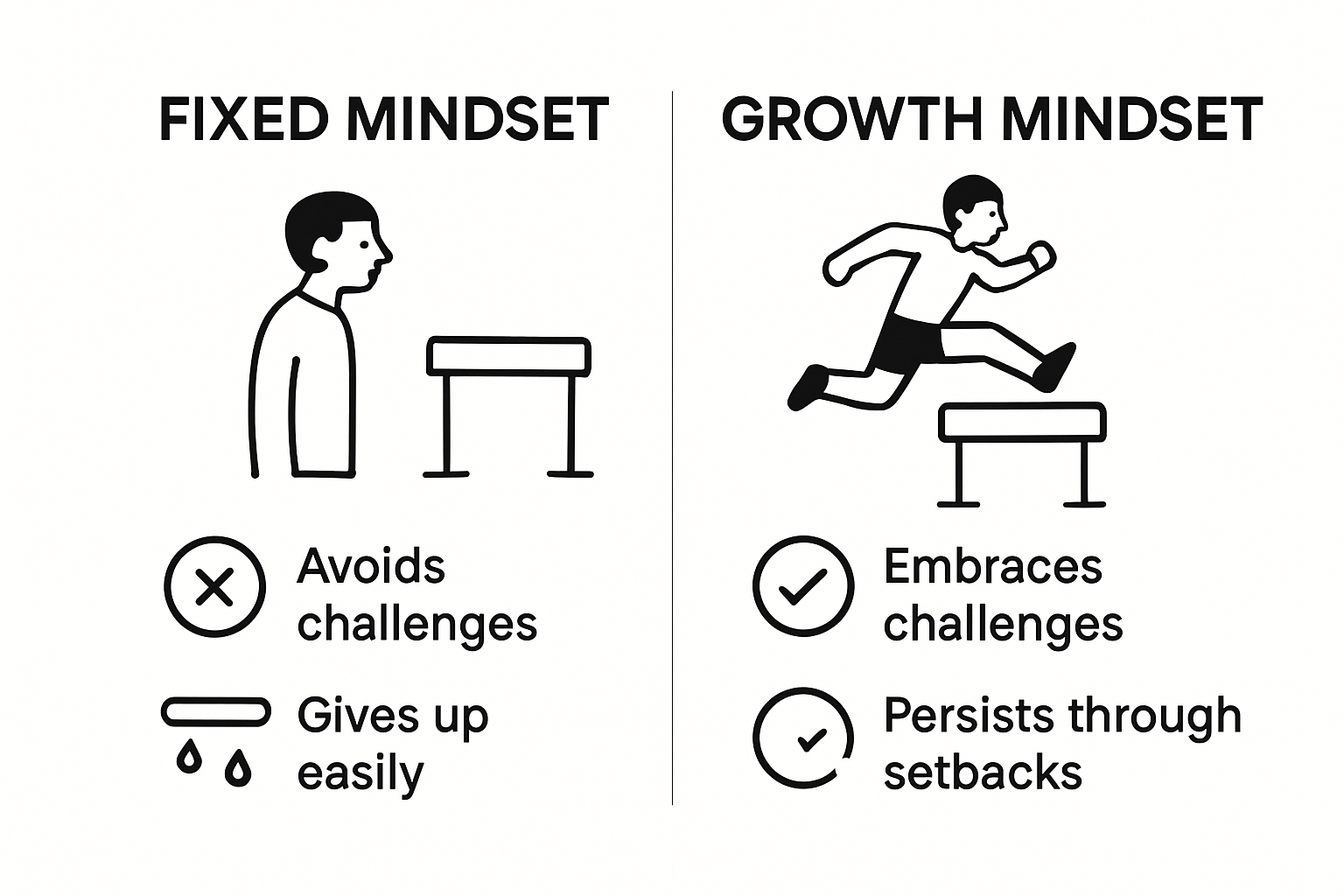
- Embracing challenges as opportunities for learning
- Viewing failures as temporary setbacks, not permanent limitations
- Believing effort and practice can improve skills
- Remaining open to feedback and constructive criticism
- Celebrating the process of learning, not just the end result
Understanding the Psychological Transformation
Psychologically, a growth mindset triggers significant cognitive shifts. When individuals adopt this perspective, they stop seeing their potential as predetermined and instead view themselves as active architects of their own capabilities.
This mental framework encourages continuous learning, reduces fear of failure, and promotes a more optimistic approach to personal and professional development.
According to the American Psychological Association, people with a growth mindset are more likely to:
- Persist through complex challenges
- Develop stronger problem solving skills
- Demonstrate increased motivation
- Achieve higher levels of personal success
By recognizing that abilities can be developed through dedication and strategic learning, individuals unlock tremendous potential for personal transformation and ongoing self improvement.
The following table summarizes and compares key characteristics of a Growth Mindset and a Fixed Mindset, as described in the article.
| Mindset Type | Belief About Abilities | Response to Challenges | View of Failure | Approach to Feedback |
|---|---|---|---|---|
| Growth Mindset | Abilities can be developed through effort | Embraces challenges as growth | Sees failure as a learning tool | Welcomes constructive input |
| Fixed Mindset | Abilities are static and unchangeable | Avoids difficult tasks | Views failure as a limitation | Ignores or resists feedback |
The Importance of a Growth Mindset: Why It Matters
A growth mindset is not just a theoretical concept but a transformative approach that fundamentally changes how individuals perceive challenges, learning, and personal potential. Understanding its significance can unlock remarkable opportunities for personal and professional development.

The Real World Impact of Mindset
The power of a growth mindset extends far beyond academic or professional settings. Research from the American Psychological Association demonstrates that individuals who embrace this perspective experience profound benefits across multiple life domains.
Key life domains where a growth mindset creates significant transformation include:
- Personal relationships and emotional intelligence
- Career advancement and professional skill development
- Academic and intellectual achievements
- Mental health and psychological resilience
- Physical fitness and personal wellness goals
Psychological and Performance Benefits
When individuals adopt a growth mindset, they fundamentally rewire their approach to challenges and setbacks. Instead of viewing difficulties as insurmountable obstacles, they see them as opportunities for learning and improvement. This shift in perspective generates several critical psychological advantages.
Psychological benefits of maintaining a growth mindset include:
- Reduced anxiety about potential failures
- Enhanced ability to handle criticism constructively
- Increased motivation to attempt challenging tasks
- Greater emotional flexibility and adaptability
- Improved self confidence through continuous learning
The significance of a growth mindset lies in its ability to transform potential barriers into stepping stones for personal development. By believing that skills can be developed through dedication and hard work, individuals create a powerful internal framework that supports ongoing learning, resilience, and personal transformation.

Mechanics of a Growth Mindset: How It Works
Understanding the inner workings of a growth mindset reveals a complex psychological mechanism that transforms how individuals approach learning, challenges, and personal development. Unlike fixed mindset perspectives, a growth mindset operates through dynamic cognitive processes that actively reshape an individual’s perception of abilities and potential.
Cognitive Processing and Neural Adaptation
Stanford University’s Center for Teaching and Learning explains that a growth mindset fundamentally alters how the brain processes information and responds to challenges. When individuals embrace this perspective, they activate neural pathways that support continuous learning and skill development.
Key cognitive mechanisms driving a growth mindset include:
- Reframing challenges as learning opportunities
- Developing neuroplasticity through deliberate practice
- Creating positive feedback loops of effort and achievement
- Reducing fear responses associated with potential failure
- Enhancing cognitive flexibility and adaptive thinking
Practical Neurological Transformation
The growth mindset operates through a sophisticated interplay of psychological and neurological processes. Individuals essentially rewire their brain’s default response to challenges, shifting from a defensive posture to an exploratory and adaptive approach. This transformation occurs through consistent practice, deliberate reflection, and intentional reframing of personal experiences.
Important neurological shifts in a growth mindset include:
- Increased dopamine response during learning experiences
- Enhanced neural connectivity in problem solving regions
- Reduced stress hormone production when facing challenges
- Improved emotional regulation mechanisms
- Greater neuroplasticity and learning capacity
By understanding these intricate mechanisms, individuals can consciously cultivate a growth mindset, transforming their approach to personal and professional development through intentional cognitive strategies.
Key Concepts of Growth Mindset: Understanding Core Principles
A growth mindset represents a comprehensive philosophical approach to personal development that transcends traditional thinking about intelligence and capability. By understanding its core principles, individuals can unlock transformative strategies for learning, resilience, and continuous improvement.
Foundational Philosophical Principles
The American Psychological Association highlights that a growth mindset is fundamentally built on the belief that human capabilities are not static but dynamically expandable through dedicated effort and strategic learning.
Central philosophical principles of a growth mindset include:
- Intelligence and abilities can be developed
- Challenges are opportunities for learning
- Effort is a pathway to mastery
- Criticism provides valuable insights for improvement
- Persistent practice leads to skill enhancement
Transformative Cognitive Frameworks
The core principles of a growth mindset operate through sophisticated cognitive frameworks that reshape how individuals perceive challenges, setbacks, and personal potential. This approach moves beyond conventional fixed mindset limitations by emphasizing adaptability, continuous learning, and intrinsic motivation.
Key cognitive frameworks that define a growth mindset include:
- Viewing failures as temporary learning experiences
- Embracing complexity as an opportunity for development
- Prioritizing learning processes over immediate outcomes
- Developing internal motivation through personal progress
- Cultivating resilience through strategic reflection
By integrating these core principles, individuals can systematically transform their approach to personal and professional challenges, creating a dynamic framework for ongoing self improvement and skill development.
This table outlines core principles of a growth mindset and explains how each one contributes to personal and professional development.
| Core Principle | Description |
|---|---|
| Intelligence and abilities can be developed | Skills grow with consistent effort and intentional learning |
| Effort is a pathway to mastery | Progress comes from practice and perseverance |
| Challenges are opportunities for learning | Hardships are viewed as essential for personal growth |
| Criticism provides valuable insights | Feedback is welcomed and applied for self-improvement |
| Persistent practice leads to skill enhancement | Ongoing effort over time results in expertise and resilience |
Real-World Applications: Applying Growth Mindset in Life
A growth mindset transcends theoretical concepts, offering practical strategies for personal and professional transformation across multiple life domains. By understanding how to implement these principles, individuals can systematically enhance their approach to challenges, learning, and personal development.
Professional and Career Development
The American Psychological Association demonstrates that growth mindset principles can dramatically reshape professional trajectories. Professionals who embrace this approach view career challenges as opportunities for skill expansion and continuous learning.
Key professional applications of a growth mindset include:
- Viewing job challenges as opportunities for skill development
- Seeking constructive feedback as a pathway to improvement
- Embracing interdisciplinary learning and cross-functional skills
- Developing resilience during organizational changes
- Proactively pursuing professional development opportunities
Personal Life and Interpersonal Relationships
In personal contexts, a growth mindset transforms how individuals approach relationships, emotional intelligence, and personal challenges. This perspective enables more adaptive, compassionate, and constructive interactions with oneself and others.
Personal life applications of a growth mindset encompass:
- Developing deeper emotional understanding and empathy
- Approaching relationship conflicts as opportunities for mutual growth
- Cultivating more flexible communication strategies
- Managing personal setbacks with constructive reflection
- Building stronger, more resilient personal connections
By intentionally applying growth mindset principles across various life domains, individuals can create a comprehensive framework for continuous personal and professional evolution.

Transform Your Growth Mindset Into Real Results
You have just learned how adopting a growth mindset can transform your approach to challenges, setbacks, and personal development. If you are eager to put these concepts into action and turn obstacles into stepping stones, the real question is: who is guiding your journey? Are you ready to unlock your highest potential with personalized support and proven strategies?
Now is the time to move from understanding to achievement. NavigatingThroughQuicksand.com is dedicated to helping you build resilience, embrace continuous learning, and achieve breakthrough growth, whether you are pursuing personal goals or leading a team. Explore our workshops and coaching sessions designed to help you implement the core principles of a growth mindset in real life. Take the next step by discovering how our professional services can help you or your organization thrive. Visit our booking page to start your journey toward lasting positive change.
Frequently Asked Questions
What is a growth mindset?
A growth mindset is the belief that abilities and intelligence can be developed through dedication, effort, and strategic learning. It contrasts with a fixed mindset, which sees these traits as static and unchangeable.
How can I develop a growth mindset?
To develop a growth mindset, embrace challenges as opportunities for learning, view failures as temporary setbacks, seek constructive feedback, and celebrate the learning process rather than just the outcomes.
What are the benefits of adopting a growth mindset?
Adopting a growth mindset can lead to increased resilience, motivation, better problem-solving skills, improved relationships, and overall higher levels of personal success in various life domains.
How does a growth mindset impact mental health?
A growth mindset can reduce anxiety about failure, enhance emotional regulation, and promote psychological resilience, allowing individuals to handle stress and challenges more effectively.
Recommended
- 6 Benefits of Personal Growth Coaching: The Ultimate Guide | Navigating Through Quicksand
- 5 Powerful Steps: How to Navigate a Quarter Life Crisis the Right Way | Navigating Through Quicksand
- What to Say to an Athlete Who Struggles with Confidence: A Step-by-Step Guide | Navigating Through Quicksand
- Powerful 4-Step Guide: Navigating Challenges, Building Resilience and a Positive Mindset | Navigating Through Quicksand
- Personal Development Goals: Practical Examples for Growth – Rezound Career Coaching