

Strong leaders are not born overnight. The path to authentic leadership starts with honest self assessment, purposeful goal setting and putting key skills into practice. Whether you are stepping into your first leadership role or aiming to fine tune your abilities, understanding what truly drives growth will shape lasting success.
Table of Contents: How to Develop Leadership Skills
Quick Summary
| Key Point | Explanation |
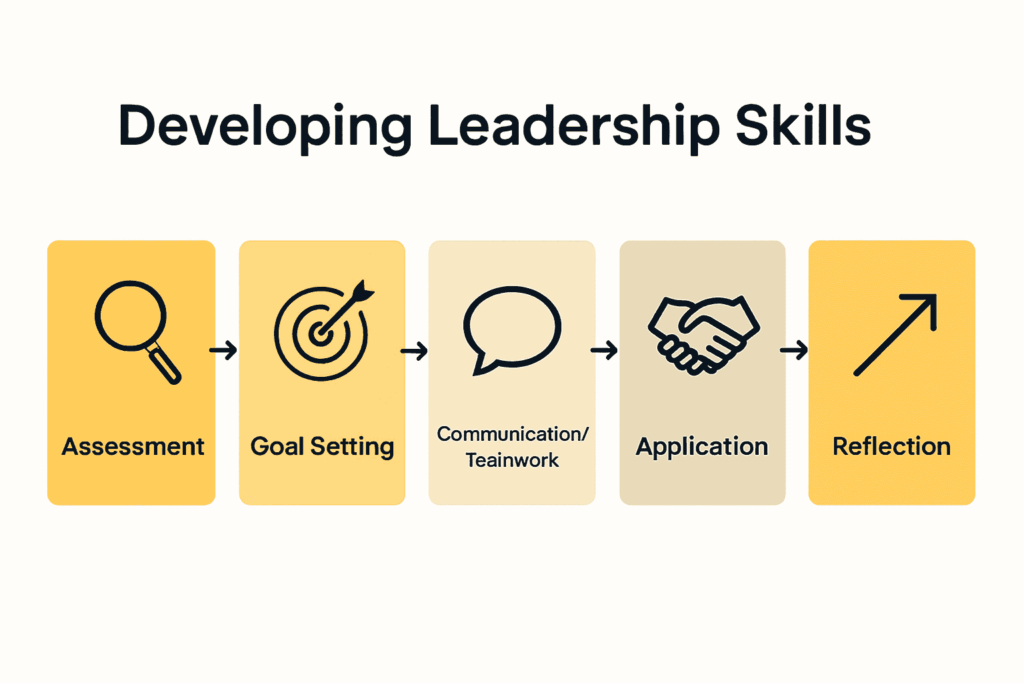
| 1. Conduct a thorough self-assessment | Use diagnostic tools to honestly evaluate your leadership skills and identify strengths and areas for improvement. |
| 2. Set SMART personal leadership goals | Create specific, measurable, achievable, relevant, and time-bound goals that align with your values and aspirations. |
| 3. Enhance communication and teamwork skills | Practice active listening and collaboration to strengthen your ability to lead and inspire teams effectively. |
| 4. Apply leadership strategies in real situations | Seek opportunities to practice your skills in varied environments, reflecting on your experiences to improve continuously. |
| 5. Regularly reflect and adjust your approach | Conduct quarterly reviews of your progress, learning from experiences and adapting strategies for ongoing development. |
Step 1: Assess Your Current Leadership Abilities
Leadership growth begins with honest self evaluation. In this critical first step, you will conduct a comprehensive assessment of your current leadership capabilities using proven diagnostic tools and strategic reflection methods.
According to OPM, effective leadership assessment involves multiple approaches. Start by selecting a robust evaluation method like the Leadership Potential Assessment or a comprehensive personality assessment tool. The Complete Leader offers an excellent 27 question self assessment that provides nuanced insights into your leadership behavioral styles and core competencies.
When completing your assessment, prioritize radical honesty. Most leaders struggle not because they lack skills but because they misunderstand their actual strengths and developmental areas. Answer each question thoughtfully and resist the urge to respond how you think you “should” answer. Look for patterns in your responses that reveal your authentic leadership approach and potential blind spots.
After completing your assessment, review the results carefully. Identify two to three specific areas where you demonstrate strong leadership potential and two to three areas requiring focused improvement. This balanced perspective will become the foundation for your targeted leadership development strategy.

Step 2: Define Clear Personal Leadership Goals
Transforming leadership potential into tangible results requires a strategic roadmap of clear and meaningful personal goals. In this pivotal step, you will craft a comprehensive leadership vision that aligns your core values with actionable objectives.
The Leadership Development Institute emphasizes the critical importance of creating a personal mission statement that serves as the foundation for your leadership journey. Begin by reflecting deeply on your core values and ultimate aspirations. As recommended by Developing Human Potential, articulate a clear leadership philosophy that captures your unique strengths and desired impact.
Design your goals using the SMART framework specificity helps transform abstract intentions into concrete achievements. Break down your overarching leadership vision into three to five specific goals that are measurable and time bound. These might include developing specific communication skills, expanding your emotional intelligence, or creating opportunities to lead cross functional teams.
Remember that effective leadership goals are not just about professional achievements but also personal growth. Select goals that challenge you while remaining authentically aligned with your values. Professional Development Goals can provide additional inspiration as you craft your unique leadership trajectory. Your goals should stretch your capabilities while remaining grounded in realistic expectations.
Step 3: Build Core Communication and Teamwork Skills
Successful leadership hinges on mastering effective communication and collaborative skills that inspire and unite teams. In this crucial step, you will develop the foundational abilities that transform good leaders into exceptional ones.
Coursera emphasizes that exceptional leaders are distinguished by their ability to motivate others and create collaborative work/team environments. Start by practicing active listening techniques that demonstrate genuine engagement. This means fully concentrating on what others are saying without interrupting, asking clarifying questions, and providing thoughtful responses that show you truly understand their perspectives.
Develop your teamwork skills by seeking out opportunities for cross functional collaboration. Volunteer for team projects/drills that push you outside your comfort zone and require coordinating with diverse groups. Practice providing constructive feedback that is both honest and supportive. Leadership Communication Workshop participants often discover that effective communication is less about speaking and more about creating meaningful connections.
Remember that great communication is a skill that requires continuous practice and self reflection. Record yourself during presentations/team meetings/games/practices to identify areas for improvement. Pay attention to your body language, tone, and ability to articulate ideas clearly during the aforementioned. By consistently working on these skills, you will gradually build the communication and teamwork capabilities that distinguish truly exceptional leaders.

Step 4: Apply Leadership Strategies in Real Situations
Theoretical knowledge transforms into authentic leadership through deliberate practice and real world application. This critical step moves you from understanding leadership concepts to embodying them in tangible, impactful ways.
Washington University’s Leadership Development Badge highlights the importance of experiential learning in developing leadership capabilities. Seek out opportunities that challenge you to apply your skills in diverse settings. This might include volunteering for cross functional projects at work, taking leadership roles in community organizations, collaborating with coaches/captains or mentoring junior team members.
Integrity in Leadership becomes paramount when applying leadership strategies. Reflect on each experience by keeping a leadership journal that documents your challenges, decisions, and personal growth. Pay attention to how you handle complex situations particularly those involving conflicting priorities or interpersonal dynamics. The goal is not perfection but consistent improvement and self awareness.
As Leadership Westchester demonstrates through their comprehensive leadership curriculum, real world application is about creating meaningful impact. Start small but think strategically. Each interaction is an opportunity to practice active listening, demonstrate empathy, and inspire those around you. Remember that true leadership is less about grand gestures and more about consistent positive influence in everyday moments, the little things done with intention and consistency compound into the big things.
Step 5: Reflect on Progress and Adjust Your Approach
Leadership development is not a linear journey but a dynamic process of continuous learning and adaptation. This final step focuses on creating a sustainable framework for ongoing personal growth and strategic self improvement.
United Nations Competency Development Guide recommends structured self assessment as a critical leadership practice. Conduct weekly/monthly/quarterly reviews of your leadership journey by documenting your experiences, challenges, and incremental achievements. Analyze your performance objectively identifying patterns of success and areas requiring focused development.
Personal Growth Strategies become essential in maintaining momentum. As Reaching Higher emphasizes, proactive self reflection is the cornerstone of meaningful personal development. Create a leadership scorecard that tracks your progress across key competencies like communication, emotional intelligence, strategic thinking, and team collaboration. Be honest with yourself and view challenges as opportunities for growth rather than setbacks.
Remember that leadership is an evolving skill. Your ability to adapt, learn and remain curious will ultimately define your leadership potential. Stay open to feedback, seek mentorship and remain committed to your continuous personal development. The most successful leaders are those who never stop learning and growing.
Elevate Your Leadership Journey with Proven Strategies and Support
Developing lasting leadership skills requires more than self-assessment and goal setting. It demands real-world application and a steadfast commitment to integrity and teamwork. If you find yourself challenged by identifying your true strengths or refining communication that inspires your team, know that you are not alone. This journey can feel overwhelming, but with the right guidance, your potential can transform into impactful leadership.
Explore the importance of core values like integrity by visiting Why is Integrity Important in Leadership? | Navigating Through Quicksand and uncover the often overlooked dimension of collaboration at What is the Most Overlooked Dimension of Teamwork? | Navigating Through Quicksand. These insights, paired with my interactive athletic/corporate/professional development workshops, one on one confidence coaching, and/or presentations can empower you to build resilience and master communication skills that unite and inspire.

Take the next step today. Visit Navigating Through Quicksand to learn about workshops, coaching sessions, and speaking events strategically designed to help you overcome obstacles and lead with confidence. Don’t wait to unlock your leadership impact and create the personal and professional growth you deserve.
Frequently Asked Questions
How can I assess my current leadership abilities?
Assess your current leadership abilities by utilizing self-evaluation tools such as a leadership potential assessment or a comprehensive personality assessment. Prioritize honesty in your responses and identify two to three strengths and areas for improvement to develop your growth plan.
What framework should I use to set my personal leadership goals?
Use the SMART framework to set your personal leadership goals, which should be Specific, Measurable, Achievable, Relevant, and Time-bound. Break down your overarching vision into three to five concrete goals, such as enhancing your communication skills within the next three months.
What specific communication skills should I focus on to become a better leader?
Focus on developing active listening and providing constructive feedback as key communication skills for effective leadership. Practice engaging fully in conversations and sparking open dialogue within your team during meetings to foster collaboration and trust.
How can I apply leadership strategies in real-life situations?
To apply leadership strategies in real-life situations, seek opportunities for involvement in team projects or mentorship roles. Start by volunteering for cross-functional projects that challenge your skills and allow you to demonstrate the leadership techniques you’ve learned.
What methods can I use for reflecting on my leadership progress?
Conduct quarterly self-assessments to reflect on your leadership journey, documenting your achievements and areas for development. Create a leadership scorecard that tracks your growth in key competencies, allowing you to make informed adjustments to your approach as needed.
How can I ensure continuous growth in my leadership skills?
To ensure continuous growth in your leadership skills, remain open to feedback and seek out mentorship. Commit to ongoing learning by regularly reviewing your leadership practices and adjusting your goals based on your evolving experiences.