

Every organization faces moments when adapting to new market pressures and team challenges feels overwhelming. For corporate team leaders and HR professionals, the call for effective leadership training is more urgent than ever. Building emotional intelligence and resilience through structured development programs empowers leaders to guide teams with confidence and fosters environments where performance thrives.
Table of Contents
Key Takeaways
| Point | Details |
| Holistic Growth Focus | Modern leadership development emphasizes the cultivation of emotional intelligence, personal character, and adaptive skills rather than just technical abilities. |
| Tailored Training Programs | Effective leadership training is not one-size-fits-all and should cater to the unique needs and styles of individuals and organizations. |
| Continuous Development | Leaders should view professional development as an ongoing journey of self-discovery, requiring regular feedback and opportunities for growth. |
| Organizational Impact | Leadership training enhances team performance and organizational adaptability, leading to improved employee engagement and talent retention. |
Defining Professional Development Leadership Training
Professional development leadership training represents a strategic approach to cultivating leadership capabilities within organizational environments. This intentional process involves developing essential skills, knowledge, and emotional intelligence that enable leaders to guide teams effectively and drive organizational success. Leadership development involves learning core competencies through structured programs designed to enhance individual and collective performance.
The core components of professional development leadership training typically include:
- Skill Enhancement: Developing critical soft skills like communication, empathy, and strategic thinking
- Emotional Intelligence: Understanding personal and team dynamics
- Strategic Learning: Acquiring frameworks for effective decision-making
- Experiential Growth: Participating in interactive workshops and mentorship programs
Unlike traditional training models, modern leadership development focuses on holistic growth. Innovative leadership frameworks emphasize personal character, individual values, and transformative learning experiences that go beyond technical skill acquisition.
Successful leadership training programs recognize that effective leadership is not a one-size-fits-all approach. They provide tailored experiences that help professionals understand their unique leadership style, recognize potential areas for improvement, and develop strategies for continuous personal and professional growth.
Pro Tip: Approach leadership development as a continuous journey of self-discovery and learning, not a destination to be reached.

Types of Leadership Training Programs
Leadership training programs have evolved to address the complex demands of modern organizational environments. Leadership development programs vary widely to meet diverse organizational needs, ranging from targeted skill enhancement to comprehensive strategic development.
The primary types of leadership training programs include:
- Executive Education: Advanced learning experiences for senior leadership roles
- Coaching and Mentorship: One-on-one personalized leadership development
- Experiential Learning Programs: Interactive workshops and simulation-based training
- Online and Blended Learning: Digital and hybrid training approaches
- Sector-Specific Training: Customized programs for public, corporate, and nonprofit contexts
Modern leadership training emphasizes more than traditional skill acquisition. Leadership programs now integrate adaptive frameworks that address contemporary challenges like technological disruption, market volatility, and complex organizational dynamics.
Successful leadership development recognizes that different organizations and leadership levels require unique approaches. These programs are designed to be flexible, targeting specific competencies while promoting holistic personal and professional growth across various leadership contexts.
Here’s a comparison of popular leadership training program types and their best-suited contexts:
| Program Type | Ideal Participant Level | Primary Delivery Method | Best Use Case |
| Executive Education | Senior leaders | In-person/Hybrid sessions | Strategic decision-making focus |
| Coaching & Mentorship | All leadership levels | One-on-one interactions | Personalized development |
| Experiential Learning | Emerging leaders | Interactive workshops | Skill building through simulation |
| Online/Blended Learning | Distributed teams | Digital/Hybrid platforms | Flexible, scalable training |
| Sector-Specific Training | Industry professionals | Customized group sessions | Tailored to sector requirements |
Pro Tip: Choose leadership training programs that align closely with your specific organizational goals and individual development needs.
Essential Skills Built Through Training
Leadership training programs systematically develop critical skills that enable professionals to navigate complex organizational challenges. Leadership skills encompass multiple competencies that go beyond traditional management techniques, focusing on adaptive capabilities and personal resilience.
The core essential skills developed through professional training include:
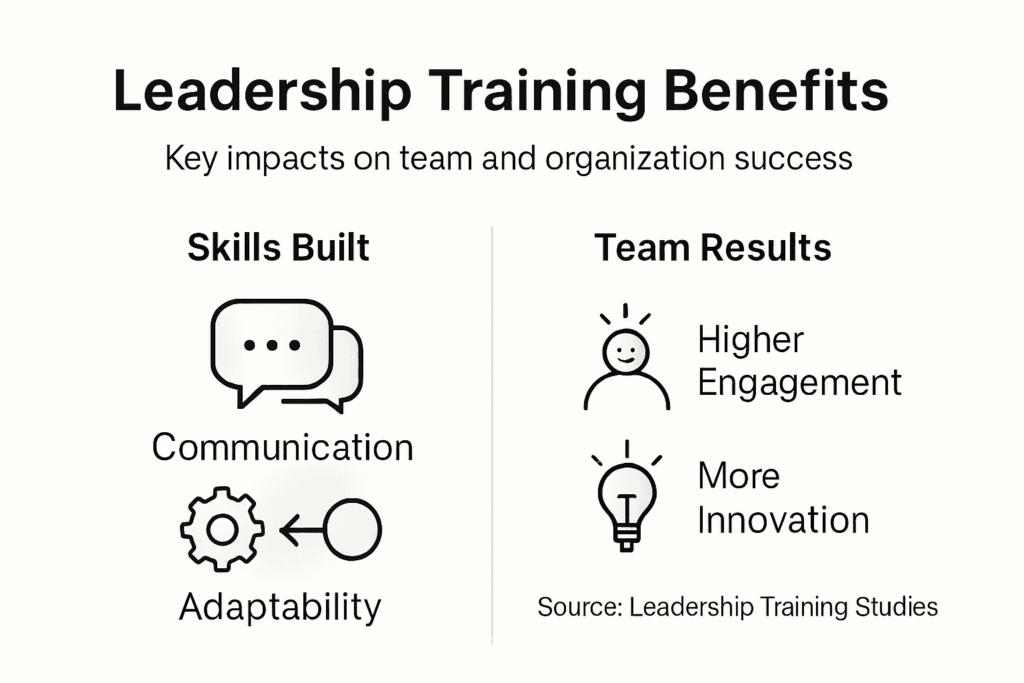
- Communication: Advanced verbal and nonverbal communication strategies
- Emotional Intelligence: Understanding and managing personal and team emotions
- Strategic Thinking: Analyzing complex scenarios and developing innovative solutions
- Conflict Resolution: Constructively addressing and resolving interpersonal challenges
- Decision-Making: Utilizing data-driven approaches to make informed choices
- Team Motivation: Inspiring and energizing team members toward collective goals
Professional training enhances leadership capabilities by providing structured learning experiences that challenge existing paradigms and develop adaptive thinking. These programs focus on transforming individual potential into organizational performance through targeted skill development.
Successful leadership training goes beyond theoretical knowledge, emphasizing practical application and personal growth. By integrating real-world scenarios and reflective practices, these programs help leaders develop a nuanced understanding of their strengths, weaknesses, and potential for continuous improvement.
Pro Tip: Approach leadership skill development as an ongoing journey of self-discovery and intentional growth.

Benefits for Teams and Organizations
Engaging leadership dramatically transforms organizational performance by creating environments where teams can thrive and achieve exceptional results. Leadership training provides strategic advantages that extend far beyond individual skill development, generating comprehensive benefits for entire organizational ecosystems.
Key organizational benefits of professional leadership training include:
- Improved Employee Engagement: Increased motivation and commitment
- Enhanced Team Productivity: Better collaboration and performance outcomes
- Stronger Communication: More transparent and effective interpersonal interactions
- Adaptive Organizational Culture: Greater resilience during change management
- Strategic Alignment: Clearer understanding of organizational goals and vision
- Talent Retention: Reduced turnover through professional development opportunities
Leadership development directly supports organizational success by equipping managers with advanced capabilities to navigate complex business challenges. These programs create a ripple effect, transforming individual potential into collective organizational strength.
Beyond immediate performance metrics, leadership training builds long-term organizational capacity. By investing in continuous learning and development, companies create adaptive, resilient teams capable of responding effectively to dynamic market conditions and emerging technological challenges.
To help gauge the true impact of leadership training, consider these common metrics versus qualitative indicators:
| Quantitative Metric | What It Measures | Qualitative Indicator | Example Insight |
| Retention Rate | Talent retention change | Employee engagement survey | Improved morale and loyalty |
| Productivity Increase | Output per team member | Peer performance feedback | Collaboration improvements |
| Promotion Rate | Career progression stats | Management-coaching observations | Stronger internal leadership |
| Goal Achievement Ratio | Project objectives met | 360-degree review results | Broader organizational alignment |
Pro Tip: Measure leadership training impact through both qualitative feedback and quantitative performance indicators.
Common Pitfalls and How to Avoid Them
Leadership development programs frequently encounter significant implementation challenges that can undermine their effectiveness and organizational impact. Understanding these potential obstacles is crucial for designing and executing training initiatives that deliver meaningful results.
Common pitfalls in leadership training programs include:
- Generic Program Design: One-size-fits-all approaches that lack customization
- Insufficient Executive Support: Minimal engagement from senior leadership
- Lack of Clear Objectives: Undefined goals and measurement metrics
- Poor Follow-Up Mechanisms: Absence of continuous learning and development support
- Limited Practical Application: Training disconnected from real-world scenarios
- Inadequate Performance Tracking: No systematic evaluation of training outcomes
Strategic program design requires comprehensive planning that addresses organizational specific needs. Successful programs integrate targeted learning experiences, executive sponsorship, and rigorous evaluation frameworks to ensure sustained leadership development.
Overcoming these challenges demands a holistic approach that considers individual learning styles, organizational context, and long-term strategic objectives. Leaders must view professional development as an ongoing process of adaptation and growth, not a singular event.
Pro Tip: Regularly assess and recalibrate leadership training programs to maintain relevance and effectiveness.
Unlock Your Team’s True Potential with Personalized Leadership Growth
Professional development leadership training is essential for overcoming challenges like generic program design and lack of clear objectives that often stall team success. If you are striving to boost communication, increase team motivation, and drive strategic alignment within your organization, embracing tailored, adaptive leadership coaching can make all the difference. This means developing emotional intelligence and strategic thinking while inspiring resilience and continuous growth.
Explore how working with a Personal Development Coach who understands the nuances of leadership transformation can elevate your team. Visit Navigating Through Quicksand to discover my customized interactive workshops and motivational speaking services designed to turn leadership challenges into opportunities for empowerment. Start your journey today toward creating a culture where individuals and teams thrive by learning more about NTQ’s dynamic programs that bring leadership principles to life.

Frequently Asked Questions
What is professional development leadership training?
Professional development leadership training is a strategic approach to cultivating leadership capabilities within organizations, focusing on skill enhancement, emotional intelligence, and strategic learning to drive success.
What are the main types of leadership training programs available?
The primary types of leadership training programs include executive education, coaching and mentorship, experiential learning, online and blended learning, and sector-specific training designed to meet diverse organizational needs.
How does leadership training impact team success?
Leadership training enhances skills such as communication, emotional intelligence, and strategic thinking, which leads to improved employee engagement, enhanced team productivity, and stronger organizational culture, ultimately benefiting team success.
What are common pitfalls to avoid in leadership training programs?
Common pitfalls include generic program design, insufficient executive support, lack of clear objectives, and inadequate follow-up mechanisms. Successfully avoiding these challenges requires a comprehensive and tailored approach to program design.
Recommended
- How to Develop Leadership Skills for Lasting Impact
- 7 Professional Development Goals You Can Set Today: What are Good Professional Development Goals? | Navigating Through Quicksand
- Understanding the Role of Coaching Workshops
- What is a Personal Development Coach? Everything You Need to Know | Navigating Through Quicksand
