
Whether you are sweating through early morning practices or aiming for a college scholarship, the drive to improve reaches far beyond skills or stats. This exploration reveals powerful strategies to help high school and college athletes rise above challenges, sharpen mental resilience, and achieve holistic self-improvement in the world of sports.
Table of Contents
Key Takeaways
| Point | Details |
| Holistic Approach | Self improvement for athletes integrates mental and physical development, emphasizing a growth mindset and resilience. |
| Types of Self Improvement | Focus on psychological, behavioral, and cognitive strategies to enhance overall performance and personal development. |
| Core Elements of Growth | Motivation, discipline, and resilience are crucial for athletes to achieve sustained personal and athletic improvement. |
| Overcoming Challenges | Developing coping mechanisms and support systems is essential to address psychological stress and maintain performance resilience. |
Defining Self Improvement for Athletes
Self improvement for athletes represents a holistic approach to personal and athletic development that goes far beyond simple skill enhancement. At its core, it is a systematic process of intentional growth targeting both mental and physical capabilities. Psychological motivation research reveals that self improvement is fundamentally driven by intrinsic factors such as personal enjoyment, self determination, and internal goal setting.
In the athletic context, self improvement involves deliberate strategies to enhance performance, build resilience, and develop a growth mindset. Unlike generic personal development, athlete-focused self improvement requires targeted approaches that integrate psychological strength with physical training. Research on self-efficacy demonstrates that an athlete’s belief in their own capabilities directly influences motivation and performance outcomes, making psychological development as crucial as physical conditioning.
Key components of self improvement for athletes include continuous skill refinement, mental conditioning, emotional regulation, and strategic goal setting. This comprehensive approach recognizes that peak performance emerges from a balanced development of mind and body. Athletes who embrace self improvement understand that growth is not linear but requires persistent effort, strategic reflection, and a willingness to challenge personal limitations.
Pro tip: Create a quarterly personal development plan that explicitly maps out both physical training objectives and mental skill development goals, ensuring holistic athletic advancement.
Types of Self Improvement in Sports
Athletic self-improvement encompasses multiple sophisticated dimensions, each targeting distinct areas of personal development. Research on athletic self-regulation reveals three primary categories of self-improvement practices: psychological, behavioral, and cognitive approaches that work synergistically to enhance overall athletic performance.
The first type involves psychological self-improvement, which focuses on mental conditioning and emotional resilience. This approach includes developing mental strategies to manage pressure, build confidence, and maintain consistent motivation. Psychological self-regulation techniques help athletes develop coping mechanisms, visualization skills, and emotional control that directly impact competitive performance.
Behavioral and cognitive self-improvement types complement psychological strategies by emphasizing skill acquisition, strategic thinking, and performance analysis. These approaches involve systematic self-monitoring, setting progressive performance goals, and critically analyzing individual strengths and limitations. Athletes utilizing these methods engage in continuous self-assessment, adapting training techniques and mental frameworks to optimize their athletic potential.
Pro tip: Develop a comprehensive self-improvement journal tracking psychological, behavioral, and cognitive growth metrics to create a holistic approach to athletic development.
Here’s a comparative overview of the three primary types of self-improvement in sports:
| Self-Improvement Type | Main Focus | Typical Methods | Example Outcome |
| Psychological | Mental resilience | Visualization, coping | Improved stress handling |
| Behavioral | Skill and habit formation | Routine adjustments | Consistent practice habits |
| Cognitive | Strategic thinking ability | Performance analysis | Better game decisions |
Core Elements That Drive Personal Growth
Motivation stands as the foundational element propelling athletes toward meaningful personal growth. Research on student-athlete development reveals that strong internal motivation drives holistic progress, connecting athletic performance with broader life objectives. This intrinsic drive helps athletes transcend immediate challenges and construct long-term personal development strategies.
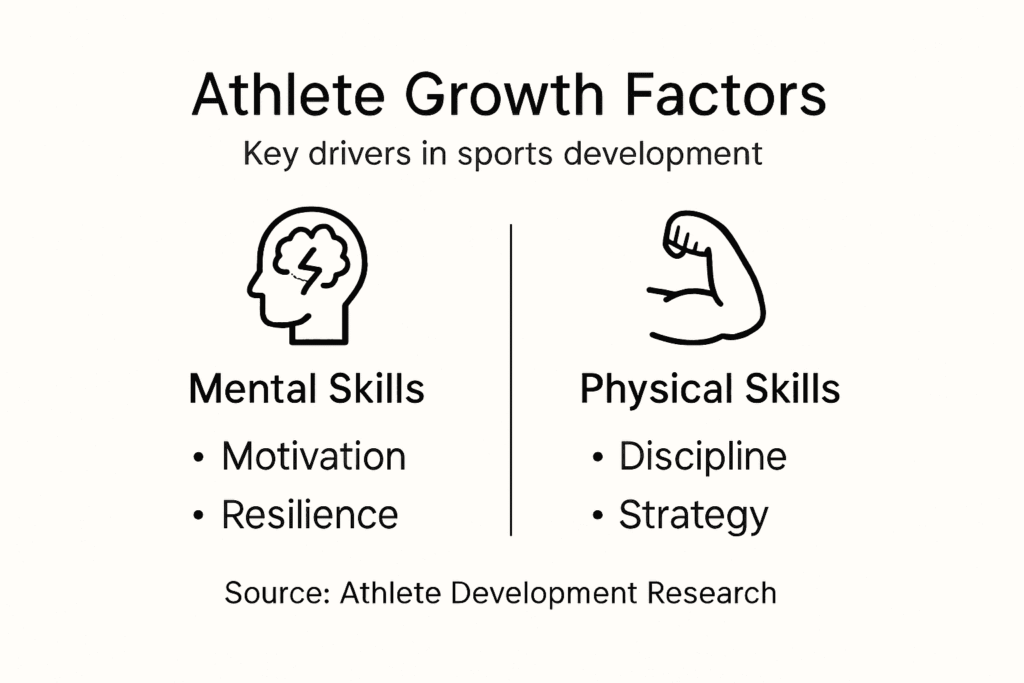
Three critical elements consistently emerge as powerful drivers of personal growth: discipline, resilience, and strategic focus. Athletic training mindsets demonstrate how these attributes translate beyond sports, creating transferable skills that support continuous personal improvement. Discipline establishes consistent effort, resilience enables overcoming setbacks, and strategic focus allows targeted personal development.
Personal growth for athletes also requires cultivating a growth mindset that views challenges as opportunities for learning and self-improvement. This approach involves continuous self-reflection, adaptive goal setting, and a commitment to incremental progress. By integrating psychological awareness with practical skill development, athletes can systematically expand their potential across multiple life domains, transforming athletic experiences into comprehensive personal transformation.
Pro tip: Create a monthly personal growth audit that systematically evaluates your progress across discipline, resilience, motivation, and strategic skill development.
This table summarizes core elements that propel personal growth in athletes:
| Element | Description | Long-Term Benefit |
| Motivation | Drives sustained improvement effort | Enduring focus and persistence |
| Discipline | Ensures consistent training action | Reliable performance progress |
| Resilience | Helps overcome setbacks | Faster recovery from challenges |
| Strategic Focus | Aligns goals with actions | Targeted growth and advancement |

Role of Motivation and Mindset in Success
Motivation represents the critical engine driving athletic performance and personal growth. Self-determination research reveals that intrinsic motivation fundamentally distinguishes high-performing athletes from their peers. This internal drive goes beyond external rewards, creating a profound psychological commitment to continuous improvement and skill mastery.
Athletes experience two distinct motivational approaches: harmonious and obsessive passion. Research on athletic passion demonstrates that harmonious passion creates sustainable motivation, enabling athletes to approach challenges with excitement and resilience. Unlike obsessive passion, which can lead to burnout, harmonious motivation supports long-term athletic development by maintaining a healthy psychological relationship with sports performance.
Successful athletes cultivate a growth mindset that transforms challenges into opportunities for learning and development. This perspective allows them to view setbacks not as failures but as essential feedback mechanisms for improvement. By embracing a mindset of continuous learning, athletes can develop greater psychological flexibility, adaptability, and emotional intelligence, which directly contribute to enhanced performance and personal resilience.
Pro tip: Create a weekly reflection journal that tracks your motivational state, identifying moments of harmonious passion and opportunities for mindset growth.
Common Pitfalls and How to Overcome Them
Psychological stress represents a significant barrier to athletic self-improvement. Research on athlete challenges reveals that elevated expectations and insufficient psychological resources can dramatically undermine an athlete’s performance and personal growth. These psychological barriers often emerge from intense performance pressures, creating a cycle of self-doubt and diminished confidence.
Student-athletes frequently encounter multifaceted challenges that extend beyond physical training. Holistic wellness strategies highlight the critical importance of addressing academic pressures, social dynamics, and mental health. Common pitfalls include burnout, imposter syndrome, and difficulty balancing competitive athletic demands with academic responsibilities, which can significantly disrupt an athlete’s development trajectory.
Successful athletes develop robust coping mechanisms to navigate these challenges. This involves creating structured support networks, practicing intentional stress management techniques, and maintaining a balanced perspective on performance. By recognizing that setbacks are inherent to the growth process, athletes can transform potential obstacles into opportunities for personal development and psychological resilience.
Pro tip: Develop a quarterly personal audit system that systematically assesses your psychological and performance challenges, creating targeted strategies for continuous improvement.
Unlock Your Athletic Potential with Expert Guidance
Struggling to maintain motivation and build resilience as you pursue self improvement as an athlete can be daunting. The article highlights critical challenges like overcoming psychological stress, developing a growth mindset, and balancing mental and physical training. If you want to transform these challenges into strengths, understanding why self motivation is important and building your confidence through proven strategies is the key.
Take the next step toward lasting personal and athletic growth with NTQ, I am a dedicated personal development coach who specializes in helping athletes overcome setbacks and unlock their true potential. Visit NavigatingThroughQuicksand.com now to explore NTQ’s interactive workshops, one on one confidence coaching, and motivational speaking presentations that can help you harness your motivation, resilience, and mindset for success. Don’t wait to elevate your performance both on and off the field/court/ice/mat/track.
Frequently Asked Questions
What is self improvement for athletes?
Self improvement for athletes is a holistic approach that focuses on both mental and physical growth to enhance performance and build resilience. It involves strategies that integrate psychological strength with physical training, highlighting the importance of mental conditioning alongside skill enhancement.
Why is motivation important for athletic self improvement?
Motivation is a fundamental driver for athletes, influencing their commitment to continuous improvement and skill mastery. Intrinsic motivation fosters a deep psychological commitment to personal growth, which is vital for achieving long-term athletic success.
What are the main types of self improvement practices in sports?
The main types of self improvement practices in sports include psychological self-improvement (mental conditioning and emotional resilience), behavioral self-improvement (skill acquisition and habit formation), and cognitive self-improvement (strategic thinking and performance analysis).
How can athletes overcome psychological stress during self improvement?
Athletes can overcome psychological stress by developing coping mechanisms, creating structured support networks, and practicing intentional stress management techniques. Recognizing setbacks as part of the growth process helps transform obstacles into opportunities for personal development as part of the growth process helps transform obstacles into opportunities for personal development.
Recommended
- 7 Good Goals to Set for Yourself as a Student-Athlete | Navigating Through Quicksand
- 7 Essential Performance Habits for Success
- How to Boost Student Athlete Fitness Training in Less Than an Hour a Day | Navigating Through Quicksand
- 5 Benefits of Being a Student Athlete You’ll Love | Navigating Through Quicksand