
The biggest gap between athletes who plateau and those who keep climbing rarely comes down to who logs more hours on the field. Research shows that resilient athletes improve performance by 12% under pressure, mindfulness cuts anxiety by 30%, and a growth mindset makes athletes 34% more likely to push through adversity. Yet most training programs spend 95% of their time on the physical side and minimal time on the mental skills that actually drive those numbers. After reading this article you will walk away with science-backed frameworks, daily habits, and real strategies built specifically for athletes who want to grow on every level.
Table of Contents
- Why mental skills matter as much as physical training
- Essential frameworks athletes need for personal growth
- Tailoring strategies for slumps, setbacks, and elite breakthroughs
- Daily habits for lasting athletic growth
- What most athletes get wrong about personal growth
- Advance your journey with guidance and support
- Frequently asked questions
Key Takeaways
| Point | Details |
| Mindset drives results | Resilience, growth mindset, and self-talk have measurable impacts on athletic achievement. |
| Frameworks amplify growth | SMART goals, mindfulness, and positive routines support rapid, sustainable improvement. |
| Adapt tools to challenges | Shift strategies for slumps, setbacks, and elite performance to unlock progress. |
| Small habits matter | Consistent daily practices yield powerful gains over time in sport and life. |
| Support accelerates success | Workshops, coaching, and focused training can take personal growth to the next level. |
Why mental skills matter as much as physical training
Coaches talk constantly about reps, sets, and split times. What gets less attention is the mental wiring that determines whether all that physical work actually shows up when the pressure is highest. The good news is that mental skills are trainable. They respond to deliberate practice just like a muscle does, and the data is hard to argue with.
Consider the core skill areas: resilience, mindfulness, goal-setting, and self-talk. Each one produces measurable outcomes. Growth mindset positively influences competitive motivation by reducing the stress response that typically derails performance at critical moments. Meanwhile, using goal-setting, visualization, mindfulness, and team cohesion significantly improves intrinsic motivation and reduces anxiety.
The table below summarizes the impact of each mental skill area so you can see exactly what the evidence shows:
| Mental skill | Key benefit | Measured impact |
| Resilience | Performs under pressure | +12% performance gain |
| Mindfulness | Reduces anxiety | 30% anxiety reduction |
| Growth mindset | Sustains motivation | 34% more perseverance |
| SMART goals | Increases achievement | 20% higher success rate |
| Positive self-talk | Boosts output | 11% performance boost |
Here is what this means practically for you as an athlete:
- Mental skills compound over time. A small daily investment in mindset work pays dividends for years.
- Unlike physical training, mental training has almost no recovery cost. You can practice it every single day.
- Athletes who treat their mental game as a priority understand the broader mental health benefits in sport that extend well beyond competition.
- Starting early creates an advantage. Most competitors will never invest in this area seriously.
Understanding self-improvement for athletes as a structured practice rather than a vague concept is the first shift you need to make. With that foundation in place, it is time to look at the specific tools that make it happen.
Essential frameworks athletes need for personal growth
Four frameworks form the core toolkit for any athlete serious about growth. Each one targets a different dimension of performance, and together they create a system that is far more powerful than any single approach.
Growth mindset is the belief that your abilities are not fixed. You can improve with effort, feedback, and time. Athletes with this mindset see a tough loss as data, not identity. They ask “What can I learn?” instead of “What does this say about me?”
SMART goals give direction to effort. SMART stands for Specific, Measurable, Achievable, Relevant, and Time-bound. Vague goals like “get better” produce vague results. A SMART goal sounds like “I will increase my sprint speed by 0.3 seconds in the next six weeks by adding two interval sessions per week.” That kind of specificity means SMART goals increase achievement likelihood by 20%.
Positive self-talk is the internal commentary that runs during training and competition. Most athletes let this run on autopilot and end up with a voice that criticizes every mistake. When you deliberately shift that commentary to instructional or motivational language, self-talk boosts performance by 11%. That is not a small number.
Mindfulness means bringing focused, non-judgmental attention to the present moment. For athletes, that translates to staying in the current play rather than replaying the last mistake or worrying about the final score.
Here is a side-by-side look at how these frameworks serve different needs:
| Framework | Best used for | Time to see results |
| Growth mindset | Long-term motivation and resilience | Weeks to months |
| SMART goals | Specific performance targets | Days to weeks |
| Positive self-talk | In-competition focus | Immediate |
| Mindfulness | Anxiety control and presence | 2 to 4 weeks |
Here is a simple walkthrough to put these into practice starting today:
- Set one SMART goal for the next 30 days. Write it down, post it somewhere visible, and review it every morning. Check out SMART goal examples specifically designed for student athletes if you need a starting point.
- Audit your self-talk during your next practice. Notice what your inner voice says when you make an error. Write down the three most common negative phrases and flip each one into a coaching cue. For practical examples of encouraging self-talk, there are scripts you can adapt immediately.
- Practice a growth mindset by ending each session with one question: “What did I learn today that I did not know yesterday?” Even tiny answers count.
- Add three minutes of mindfulness before bed. Focus only on breathing. When your mind wanders, return it without judgment. That is the practice.
Pro Tip: Write your self-talk script before competition, not during it. Decide in advance what you will say to yourself after a mistake, between plays, and at the toughest moment of the game. Athletes who prepare this script report feeling far more grounded when the pressure spikes. You can see positive self-talk in action with real athlete examples that show exactly how this works.
Studying personal growth strategies across different sports shows that these frameworks apply universally. A swimmer, a soccer player, and a wrestler all face the same internal battles. The tools translate across every context.
Tailoring strategies for slumps, setbacks, and elite breakthroughs
Every athlete hits a wall. Injuries, losing streaks, burnout, and motivation droughts are not signs of failure. They are normal parts of a competitive career. What separates athletes who come back stronger is how they respond in those moments rather than how they perform when everything is going well.
Research confirms that during slumps and injuries, the most effective strategy is narrowing your focus to controllables and rebuilding momentum through small daily wins. You cannot control whether your knee heals faster. You can control whether you do your rehab exercises with full effort, whether you visualize your sport every morning, and whether you show up mentally even when you cannot show up physically.
Here is what to do when you are in a slump or facing a setback:
- Focus exclusively on what you control: effort, attitude, preparation, and recovery actions.
- Set micro-goals measured in days, not months. “Today I will do my full warm-up routine” counts.
- Reframe the setback as training for your mental game. Pressure builds capacity.
- Stay connected to your team or sport even if you cannot compete. Isolation amplifies setbacks.
- Use visualization daily. See yourself executing well. Your brain processes this as real rehearsal.
For athletes looking to push past a plateau, the work becomes more nuanced. It requires deeper self-awareness, honest feedback loops, and the willingness to question what has always worked before. Reading overcoming adversity examples from real athletes gives you a concrete sense of what that looks like in practice.
For injury recovery specifically, understanding how other athletes have navigated recovering from setbacks with conditions like long COVID shows that the mental side of recovery is just as critical as the physical protocol.
Pro Tip: During a setback, keep a “controllables journal.” Every morning, write down two things you fully control that day. Focus only on those two things. This prevents the mental spiral that turns a small slump into a long one.
Daily habits for lasting athletic growth
Strategy without structure falls apart. The frameworks above only produce results if you build them into your daily life consistently. Here is how to do that in a way that actually sticks.
The research is clear. A structured psychological skills program covering goal-setting, visualization, mindfulness, and team cohesion produces significant improvements in just four weeks. That timeframe is important because it means you do not need months before you start to feel a difference. You just need to start.
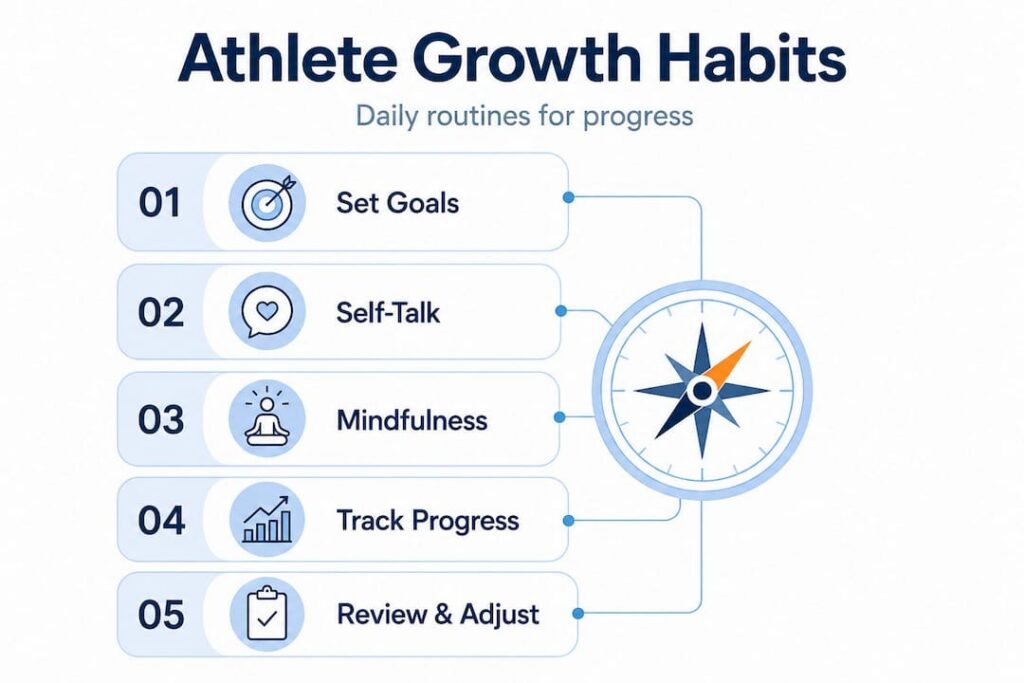
Here is a simple five-step daily routine you can build around your existing training schedule:
- Morning intention (2 minutes): Read your SMART goal out loud. Remind yourself why it matters.
- Pre-training visualization (5 minutes): Close your eyes and mentally rehearse your session or competition. See it going well. Include obstacles and your response to them.
- In-practice self-talk check (ongoing): Notice your internal voice. Replace criticism with coaching cues in real time.
- Post-training reflection (3 minutes): Write one thing you executed well and one thing you will adjust tomorrow.
- Evening mindfulness (5 minutes): Wind down with focused breathing. Let the day close without carrying performance anxiety into your sleep. Write down two good things that happened during your training, practice, game/match/competition.
Additional weekly habits that drive compound growth include:
- Journaling: Not just logging workouts but reflecting on mental patterns, emotional responses, and growth moments.
- Habit stacking: Attach a new mental habit to something you already do. For example, do your visualization immediately after lacing up your shoes.
- Team connection: Have one honest conversation per week with a teammate or coach about mindset, goals, or challenges. Community reinforces individual growth.
- Reading or listening: Fifteen minutes per week on athlete development content keeps your mindset education active.
Building these habits supports improving self-esteem with routines in ways that show up under pressure. The more consistently you practice, the more automatic the mental skills become. And automatic mental skills are what actually carry you through the biggest moments of your athletic career.
For a deeper look at structuring this kind of practice, mental strength routines give you a framework built specifically for athletes who want resilience that lasts.
Pro Tip: Start with micro-habits, not massive overhauls. If five minutes of mindfulness feels like too much, start with sixty seconds. Consistency at a small scale beats perfection that never happens.
What most athletes get wrong about personal growth
Here is the uncomfortable truth most programs will not tell you: working harder is not always the answer.
Athletes are conditioned to believe that effort equals results. More reps, more miles, more time in the gym. That belief is partially true and largely misleading. What the best athletes in the world do differently is not that they outwork everyone else. It is that they outthink their past selves. They invest in self-awareness, recovery framing, and mental habit building in ways that most competitors never even consider.
The reason most athletes ignore mental routines is simple: the benefits are invisible until they are tested under pressure. You do not see your resilience growing during a quiet Tuesday practice. You see it during the championship game in the fourth quarter when everything is on the line. By then, it is too late to build it. Either the work is already done or it is not.
The athletes I have worked with who made the biggest leaps were rarely the most physically gifted. They were the ones who took why resilience training works seriously before they needed it. They built the mental foundation during the ordinary days so it was solid when the extraordinary moments came.
Deep practice of self-awareness means honestly examining your reactions, your patterns under stress, and your stories about failure. Most athletes avoid this because it is uncomfortable. Champions lean into it because they understand that discomfort is where growth lives. Reframing failure as information rather than identity is not a motivational cliche. It is a daily practice that, over time, rewires how you show up in every competitive situation.
Advance your journey with guidance and support
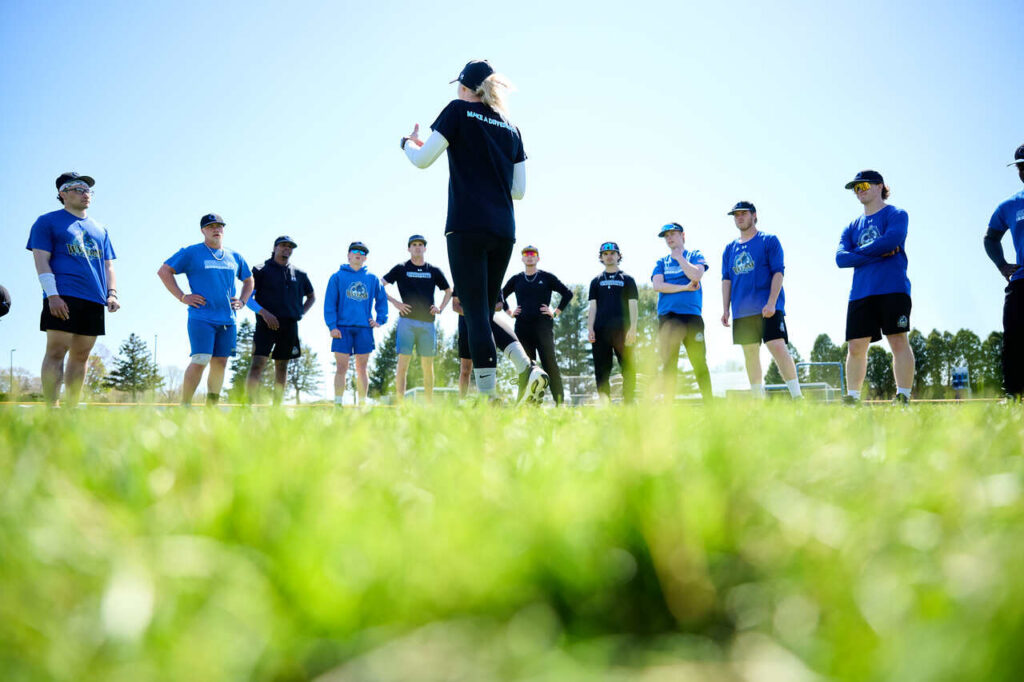
If this article sparked something in you, you are ready for the next step. Understanding the frameworks is one thing. Applying them under real pressure is another.
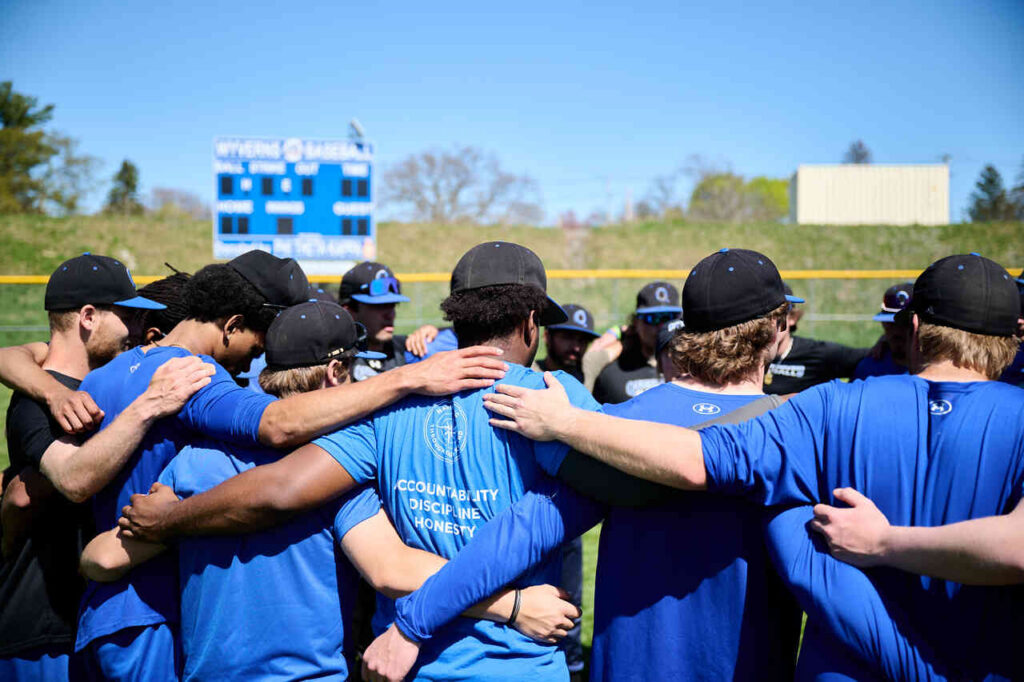
I work directly with athletes, teams, and coaches to build the mental strength and resilience that show up when it matters most. Through hands-on workshops, individual coaching, and team development programs, the focus is always on practical skills you can use immediately. Explore resources on mental strength training and resilience building exercises to go deeper on what you learned here. When you are ready to take your growth seriously, visit the full range of athlete-focused services and find the right program for where you are now.
Frequently asked questions
What is a growth mindset in sports?
A growth mindset in sports means believing your abilities can improve with effort, learning, and perseverance. Athletes with this belief are 34% more likely to push through adversity instead of giving up.
How quickly can mental training improve athletic results?
Noticeable improvements can occur in as little as four weeks with consistent practice. A structured four-week program of goal-setting, visualization, and mindfulness significantly improves motivation and reduces anxiety.
What are the easiest mental skills for athletes to start with?
Positive self-talk, visualization, and SMART goal-setting are the most practical entry points for most athletes. Research shows self-talk boosts performance by 11% and SMART goals increase achievement by 20%.
How do I stay motivated after setbacks or injury?
Focus on what you can fully control each day and rebuild confidence through small, achievable wins. Narrowing focus to controllables during slumps and injuries is the most evidence-supported recovery strategy.
Can these mental strategies help in academics or work?
Absolutely. The same skills that build athletic performance, specifically resilience, self-talk, and goal-setting, transfer directly to success in school, careers, and any high-pressure environment.
Recommended
- Your Path to Excellence | Navigating Through Quicksand
- Personal Growth Strategies: Complete Expert Guide
- Blog | Navigating Through Quicksand
- What Is Self Improvement and Why It Matters for Student-Athletes | Navigating Through Quicksand